
Know Your Rights During ICE or Law Enforcement Encounters
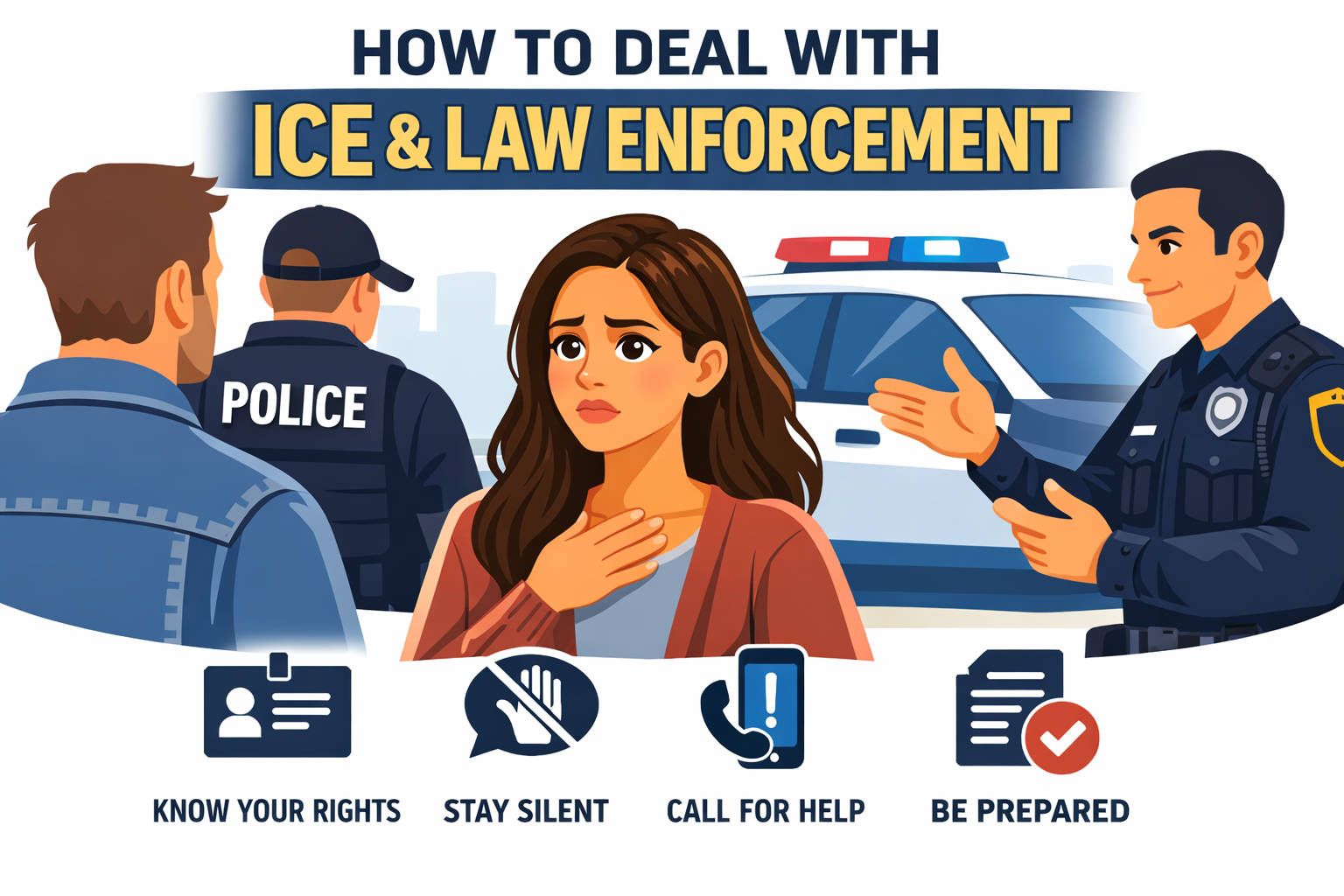
As part of our commitment to supporting you and our wider community, we’ve gathered guidance from reliable civil-rights organizations about how to exercise your rights and how to safely support others during encounters with law enforcement or immigration officers. Please remember this information is for educational purposes only and does not constitute legal advice.
Printable Guide (PDF)
Prefer something you can save or share? Download the printable guide here:
Deportation Defense Hotline: 401-675-1414 (Report ICE activity even if no one is being detained.)
Bystander Actions During Immigration Enforcement
If you witness immigration agents detaining someone, it can be difficult to know what to do. The ACLU recommends staying calm and taking thoughtful steps to support the person being detained without interfering. Below are several actions you can take.
Observe and document
- Use your smartphone to record video of the interaction
- Capture identifying details like agency names on vests, badge numbers, vehicle make and model, and license plates.
- Comply with officers’ requests to move back, but continue recording from a safe distance. Your First Amendment right protects you when filming law‑enforcement in public spaces.
- Write down everything you remember and collect contact information and copies of photos or video from other witnesses.
Gather and share information
- Alert local advocates or legal services about ICE activity.
- Be prepared to share specifics: the exact location, number of agents, what they are doing, how long they have been there and any known details about the person being detained.
- Familiarize yourself with common acronyms you might see on officers’ uniforms: “ICE” (Immigration and Customs Enforcement), “ERO” (Enforcement and Removal Operations), “CBP” (Customs and Border Protection) and “DHS” (Department of Homeland Security).
- If you know the detained person’s family or emergency contact, call them so their support network is alerted.
Avoid interference
- Do not touch, push, or hit an officer.
- Don’t run; if you choose to leave, walk calmly.
- Understand the legal consequences of intentionally blocking or obstructing an arrest.
Provide emotional support and remind people of their rights
- Offer calm, verbal support to the person being detained. You have a First Amendment right to speak to them as long as you are not obstructing officers.
- Remind them of their rights, such as the right to remain silent, the right not to answer questions and the right to ask for a lawyer.
-
Other actions
- Share this resource and talk with friends or family about creating emergency plans.
- Save deportation hotline numbers in your phone so you can report immigration activity quickly.
- Use humanizing language.
- Advocate for pro‑immigrant laws and policies in your community.
- Help at‑risk friends and family prepare: maintain an emergency contact list, keep copies of legal documents accessible, consult an immigration attorney, memorize important phone numbers and make care plans for children.
Deportation Defense Hotline: 401-675-1414 (Report ICE activity even if no one is being detained.)
Your Rights and Responsibilities When Stopped
Whether you are approached by police, immigration officers, or FBI agents, you have constitutional rights. Knowing both your rights and responsibilities can help you stay safer during these interactions.
Your rights
- Remain silent – you can politely say that you wish to remain silent.
- Refuse to consent to searches of yourself, your car or your home.
- Calmly leave if you are not under arrest.
- Ask for a lawyer if you are arrested and wait until they arrive before answering questions.
- Constitutional protections regardless of your immigration or citizenship status.
Your responsibilities
- Stay calm and be polite.
- Do not interfere with or obstruct officers.
- Do not lie or present false documents.
- Prepare yourself and your family in case you are arrested.
- Remember details of the encounter and file a complaint if your rights are violated.
Common Situations: What to Do
If you are stopped for questioning
- Stay calm, don’t run and keep your hands visible.
- Ask if you are free to leave. If the officer says yes, walk away calmly; if you are under arrest, you have the right to know why.
- You can refuse to answer questions – state that you want to remain silent.
- You may refuse consent to searches, but police may conduct a pat‑down if they suspect a weapon.
If you are stopped in your car
- Pull over in a safe place, turn off the engine, turn on the inside light and place your hands on the steering wheel.
- Provide your driver’s license, registration and proof of insurance if asked.
- You can refuse a request to search your car, but police may search without consent if they suspect evidence of a crime.
- Both drivers and passengers have the right to remain silent; passengers may ask if they are free to leave.
If you are questioned about your immigration status
- You do not have to discuss your immigration or citizenship status with officers.
- You may decline to answer questions about where you were born or how you entered the country.
- If you have immigration papers with you and are asked to produce them, you must show them; adults over 18 should carry documentation with them.
- Never lie about your citizenship status or provide fake documents.
If you are contacted by the FBI
- You do not have to answer questions without a lawyer present.
- Ask agents to leave their contact information or business card so you can follow up with an attorney.
- You can refuse an interview or, if you agree to one, insist that a lawyer be present.
If you are arrested
- Do not resist arrest, even if you believe it is unfair.
- Say you wish to remain silent and ask for a lawyer immediately.
- Don’t sign or agree to anything without your lawyer present.
- You have the right to make a local phone call; police cannot listen if you call a lawyer.
- Prepare in advance: memorize important phone numbers, make emergency plans for children and medication.
Special Considerations for Non-Citizens
- Ask your lawyer how a criminal conviction or plea may affect your immigration status.
- Discuss your immigration status only with your lawyer.
- If an immigration agent visits you in jail, do not answer questions until you speak with a lawyer.
Quick Reference
The tables below condense key points into short phrases. They are designed for quick reference and do not replace the more detailed guidance above.
Bystander Focus |
Key actions |
| Observe & record | Film; note badges & vehicles; move back if asked |
| Share information | Alert advocates; report location/agents/actions; call family |
| Avoid interference | Don’t touch officers; stay calm; don’t obstruct |
| Support the person | Emotional support; remind of right to silence & lawyer |
| Prepare & advocate | Save hotlines; emergency plans; advocate for policy change |
Encounter Types |
Key rights & responsibilities |
| General encounter | Remain silent; refuse searches; ask for a lawyer; stay calm & polite |
| Questioning | Stay calm; ask if free to leave; refuse to answer; refuse consent to search |
| In a car | Stop safely; show documents; refuse car search; passengers may stay silent |
| Immigration questions | No obligation to discuss status; show documents if asked & available |
| FBI contact | Don’t answer without lawyer; get agent’s card; refuse interviews |
| Arrested | Don’t resist; ask for lawyer; stay silent; plan ahead |
This resource was compiled from public guidance published by the ACLU. For further details, please consult your local ACLU affiliate or speak with a qualified attorney. Information reproduced here is not intended as legal advice and may not reflect changes after January 2026.

East Coast Mental Wellness provides inclusive, compassionate mental health care through in-person and online therapy. Services include individual, couples, group sessions, life coaching, immigration evaluations, and LGBTQ+ affirming care—all in a supportive environment.
Contact Us
- 401-227-0372
- intake@eastcoastmentalwellness.com
Resources
If you or someone you know is struggling or in crisis, help is available. Text or call 988 or chat 988lifeline.org. Caring counselors listen and provide free and confidential support 24/7.
National Transgender Lifeline Crisis Line (Staffed by Transgender Individuals) 1-877-565-8860
National Coalition Anti-Violence Programs: 212-714-1141
Lesbian, Gay, Bisexual and Transgender (LGBT) National Hotline:
1-888-843-4564
LGBT National Youth Talkline:
1-800-246-PRIDE (1-800-246-7743)
LGBT National Senior Talkline:
1-888-234-7243
LGBT Youth Talkline: 800-246-7743
